


Witch Hat Atelier, volume 14 by Kamome Shirahama
Apr. 8th, 2026 08:53 am![[personal profile]](https://www.dreamwidth.org/img/silk/identity/user.png) james_davis_nicoll
james_davis_nicoll
Coco and chums have an innovative cure for the monster currently rampaging through town... an innovative cure from which a diligent cop is determined to protect society.
Witch Hat Atelier, volume 14 by Kamome Shirahama


10 years
Apr. 7th, 2026 10:50 amjames_davis_nicollToday is the 10th anniversary of my first paid live theatre shift. I wasn't sure I'd get to the end it, let along a decade.
(Humanities Theatre's audience floor slopes forward slightly. My reaction of "well, this feels different" very quickly turned into actual pain)
(Humanities Theatre's audience floor slopes forward slightly. My reaction of "well, this feels different" very quickly turned into actual pain)
Foreigner (First Foreigner, volume 1) by C J Cherryh
Apr. 7th, 2026 08:47 amjames_davis_nicoll
Following a failed assassination, professional intermediary Bren Cameron is hustled off to a safe house... or possibly, to a location where it will be easier to dispose of the befuddled ambassador.
Foreigner (First Foreigner, volume 1) by C J Cherryh
Wolves
Apr. 7th, 2026 06:29 ammrissa New poem out today in Uncanny! I wrote The Truth About Wolves for my beloved younger godchild. I hope you enjoy it too.
distilling the prose
Apr. 6th, 2026 11:45 pmmarycatelliRevise, revise, revise.
Try to turn the prose into triple-distilled lightning, with all the meaning as packed in as possible, for the most punch.
Means a lot of expanding to make the details tell. Ah, metaphors
Try to turn the prose into triple-distilled lightning, with all the meaning as packed in as possible, for the most punch.
Means a lot of expanding to make the details tell. Ah, metaphors
The latest book
Apr. 6th, 2026 03:59 pmsholioI finished edits on Luke over the weekend (Westerly Cove 4). Feel free to grab a copy 'til it goes live on Amazon on April 17!

Get it on Bookfunnel:
https://dl.bookfunnel.com/30s06n16u7
(Blurb is still a work in progress.)
Get it on Bookfunnel:
https://dl.bookfunnel.com/30s06n16u7
(Blurb is still a work in progress.)
The Great Panjandrum Himself
Apr. 6th, 2026 07:36 pmmarycatelliThe Great Panjandrum Himself by Samuel Foote
In nonsense perhaps matched only by Lewis Carroll's The Mad Gardener's Song. An actor said he could memorize anything in one reading, and this was the attempt to defeat him.
In nonsense perhaps matched only by Lewis Carroll's The Mad Gardener's Song. An actor said he could memorize anything in one reading, and this was the attempt to defeat him.
The Pagan Religions of the Ancient British Isles
Apr. 6th, 2026 06:35 pmmarycatelliThe Pagan Religions of the Ancient British Isles: Their Nature and Legacy by Ronald Hutton
A long topic
( Read more... )
A long topic
( Read more... )
Bundle of Holding: Runecairn
Apr. 6th, 2026 01:59 pmjames_davis_nicoll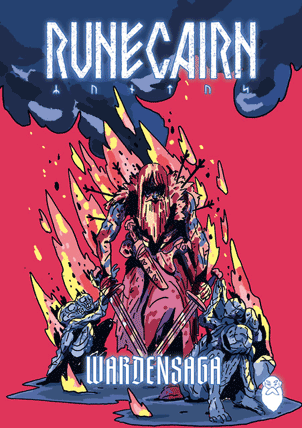
An all-new Runecairn Bundle presenting Runecairn, the one-on-one tabletop fantasy roleplaying game of Soulslike Viking fantasy from By Odin's Beard, along with the weird-West RPG We Deal in Lead.
Bundle of Holding: Runecairn
larryhammerFor Poetry Monday:
Sir Gawain Fucks the Green Knight, Kim Deyn
Here’s a tale ripe for telling. Can’t say where I heard it first—in pretty French or Dutch. Perhaps as a young lady walking longside the Rijn. I’ll spin it for you in an English tongue, fine as frost on lace, sweet as malmsey wine. So it goes that young Gawain, strength kissed into his limbs, fresh as the bright dawn, comes trembling down to the Green Chapel. You’ve heard this tale, I know. His breath makes peach fuzz in the air, fear into him like worm to apple. Christmas Morn is too soon, time is short. You have your own life to save, he says, picking through thorn and bough to an ivy-clad cave.
The creature is the Jack O’ the Glen / forest prince / the wood’s own laughter. Beard of lichen and eyes like dark elder. I need not repeat their exchange—my boy’s flinching heart—a songbird in a rattled cage. It is after the blows are dealt, he asks, what god is worshipped in these green trees? Boy, the Knight replies, boy, were you not just down on your knees?
The Knight is the tang of sap / bark rough and petal soft / everywhere leaves scatter / easily crushed / Gawain clings / hardly knows what he clings to / he is the forest and the flower / a turmoil of roots / where god and tree meet and melt / the birch the oak the fern the deer / mushroom maggot crow / here Gawain is branch and bud / blow returned for blow
Originally published in Queerlings Issue 7 (Apr 2023). I have to wonder whether the initial inspiration was the last line.
---L.
Subject quote from Don’t Leave Me This Way, Harold Melvin & The Blue Notes feat. Teddy Pendergrass (Thelma Houston’s disco cover is admittedly better).
Sir Gawain Fucks the Green Knight, Kim Deyn
Here’s a tale ripe for telling. Can’t say where I heard it first—in pretty French or Dutch. Perhaps as a young lady walking longside the Rijn. I’ll spin it for you in an English tongue, fine as frost on lace, sweet as malmsey wine. So it goes that young Gawain, strength kissed into his limbs, fresh as the bright dawn, comes trembling down to the Green Chapel. You’ve heard this tale, I know. His breath makes peach fuzz in the air, fear into him like worm to apple. Christmas Morn is too soon, time is short. You have your own life to save, he says, picking through thorn and bough to an ivy-clad cave.
The creature is the Jack O’ the Glen / forest prince / the wood’s own laughter. Beard of lichen and eyes like dark elder. I need not repeat their exchange—my boy’s flinching heart—a songbird in a rattled cage. It is after the blows are dealt, he asks, what god is worshipped in these green trees? Boy, the Knight replies, boy, were you not just down on your knees?
The Knight is the tang of sap / bark rough and petal soft / everywhere leaves scatter / easily crushed / Gawain clings / hardly knows what he clings to / he is the forest and the flower / a turmoil of roots / where god and tree meet and melt / the birch the oak the fern the deer / mushroom maggot crow / here Gawain is branch and bud / blow returned for blow
Originally published in Queerlings Issue 7 (Apr 2023). I have to wonder whether the initial inspiration was the last line.
---L.
Subject quote from Don’t Leave Me This Way, Harold Melvin & The Blue Notes feat. Teddy Pendergrass (Thelma Houston’s disco cover is admittedly better).


Trail, Garden
Apr. 5th, 2026 04:37 pmranunculusHave almost cleared the space between the greenhouse and the shop of grass. It was fallow last year which doesn't mean much. It needs a bunch of compost and other organic material dug in. This year some of the tomatoes I'm growing will go in part of that bed. I've been metering the PH in the garden. It is pretty acid. Not sure why. Tomorrow I'll be sending off a soil sample to see what the lab says about PH and nutrients. Very curious.
There are a bunch of people up camping for the weekend. It is M.J.'s annual Easter celebration. Always nice to see people enjoying themselves.
Carrie and I left the crowd at the Cow Corrals and walked up Red Barn Creek. Carrie had Juno, her horse, with her, but preferred to walk about half the distance. From Post A, which is on a ridge, there is a really nice loop that we call the "Waddington Pond Loop". It doesn't actually go to a pond, the pond is on the neighbor's place, but it is still a nice ride. The northwest corner of this ride has two ways to get there. Both ways involve very steep hills. We wanted to see if we could do a middle way that might be less steep and more pleasant. I knew there -was- a way, but it hadn't been used in a decade and no one, including me, knew exactly where it was. It is a GREAT way to do that part of the ride. Not steep at all, though the trail does go across some rather steep sidehills. I need to walk the chainsaw down it and clear a few limbs to make it an enjoyable ride, no one likes dodging limbs and brush. I also want to take the mattock down and widen the trail in a place where an old slide makes it a little scary. The trail widening is only for about 35 feet. I'm not scared of that section, Carrie isn't, but some more timid riders might be. Pictures next time I go out, which will be on the 17th. A nice young man named Joel is going to come help me clear the trail. Not that I really need help, I just don't want to run the chainsaw while alone in steep country, and I want someone to drive the 4 wheeler out to the end point so I don't have to lug the chainsaw and the mattock back over the hill.
There are a bunch of people up camping for the weekend. It is M.J.'s annual Easter celebration. Always nice to see people enjoying themselves.
Carrie and I left the crowd at the Cow Corrals and walked up Red Barn Creek. Carrie had Juno, her horse, with her, but preferred to walk about half the distance. From Post A, which is on a ridge, there is a really nice loop that we call the "Waddington Pond Loop". It doesn't actually go to a pond, the pond is on the neighbor's place, but it is still a nice ride. The northwest corner of this ride has two ways to get there. Both ways involve very steep hills. We wanted to see if we could do a middle way that might be less steep and more pleasant. I knew there -was- a way, but it hadn't been used in a decade and no one, including me, knew exactly where it was. It is a GREAT way to do that part of the ride. Not steep at all, though the trail does go across some rather steep sidehills. I need to walk the chainsaw down it and clear a few limbs to make it an enjoyable ride, no one likes dodging limbs and brush. I also want to take the mattock down and widen the trail in a place where an old slide makes it a little scary. The trail widening is only for about 35 feet. I'm not scared of that section, Carrie isn't, but some more timid riders might be. Pictures next time I go out, which will be on the 17th. A nice young man named Joel is going to come help me clear the trail. Not that I really need help, I just don't want to run the chainsaw while alone in steep country, and I want someone to drive the 4 wheeler out to the end point so I don't have to lug the chainsaw and the mattock back over the hill.